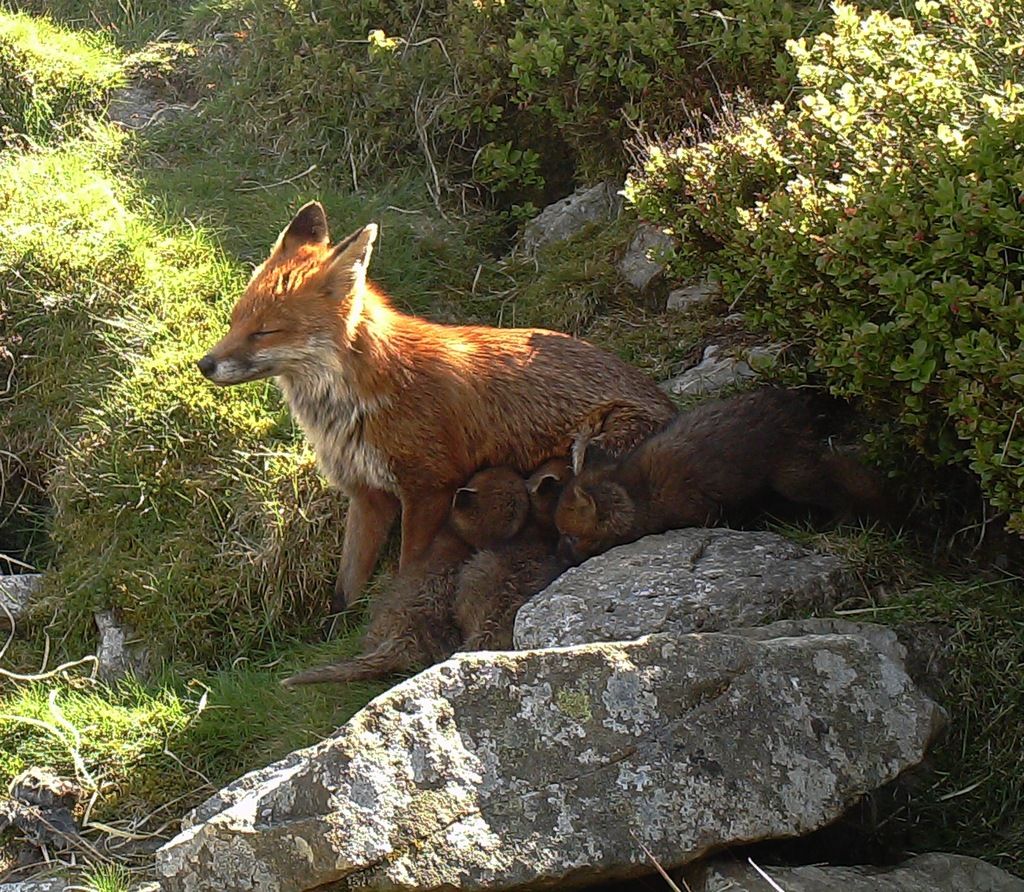
Where oh where has my little fox gone.
Posted: Sat Oct 22, 2016 10:18 pm
Growing up in the late seventies, around here in the wooded ridge tops and cleared pastures of southwest Virginia, we had fox. Reds were bringing 70 bucks, greys maybe 50 for a good while. Reds topped 100 at one point, for the right fox. We had people trapping on our farm. Sometimes one guy would pull out and another guy would see if there were any left. It was the same most every farm in the valley. My Dad shot fox on sight. Because one time old so and so's steer got the rabies and besides, mrs. so and so two miles up the road has chickens. Anybody that groundhog hunted was told to shoot fox, deer hunters were told to shoot fox, and they did. I reckon there were 30 or 40 fox killed between here and the neighbors, year in and year out. You would go out in the evening looking at deer, drive out on a hill and see a fox come out in the edge of a field, maybe another in another field. Sometimes a bunch of pups would come out and you would see a whole herd of them.
I started trapping in 1987/88. The fur market crashed. I had the run of the place with no competition. Even as a novice, I got to where I was putting up a dozen or so. When I started driving, my home range went up, and with absolutely no trapping competition, I started doing pretty good. I wasn't making much money, but I had a big time, and learned a lot. This was about the time coyotes hit the scene, so I had to do a bunch more learning. I started noticing less fox, every year less and less. Now it is easy to say that the coyotes kill them all, I don't believe this exactly it. I've cut a lot of coyote stomachs open, they don't appear to eat them very often. I have found dead fox in the traps, bitten in the back maybe even a mouth full of coyote fur.
So I guess they do kill them just to be killing them, but that seems like a lot of effort for very little reward for the coyote. They do push them out, it seems, now if you want to catch a red, you have to be close to town. Plenty of them living in the city, but there are coyotes there too, believe it or not. You will catch a few reds out in the farm country come december when they disperse, they wander all over, but by springtime they are settled somewhere close to people. The greys seem to be hanging in the thick stuff like they always did, but there are nowhere near as many as there once was.
I always just kind of accepted that the coyotes kill them and run them out. Now that I have actual fox dogs, I have been studying on this. Knowing coyotes the way I do, I just can't see them expending the energy that it would require to run down and kill every fox in their territory. They sure don't need to do it for food, as there is plenty to eat around here.
I started looking more at coyotes impact on fox, which is undeniable, as more of a side effect, rather than a direct action. Something that I noticed in this same time period, back in those days of shooting fox on sight, the reason we were out there was because we were groundhog hunting. There were lots of groundhogs back then. Us boys killed one or two hundred a year, kept running tallies and compared when we got back in school. Groundhogs lived back in the mountains and resupplied the fields as quick as you could shoot a field dry. Now, about the only groundhogs around are somewhere under an old barn, in a rock pile, or in a fence row. Groundhogs in the middle of a field are non-existent now, you don't see holes back in the mountains now either. Plenty of groundhogs in town and in the cities.
Foxes need dens to raise pups. They aren't the best diggers, they usually enlarge an existing den. It is preferable if they have multiple den sites in case fleas or pestilence drives the litter out of a den. According to the coyote bellies I have cut open, the coyotes I have seen running across the road with a groundhog in their mouth and the coyotes I have seen camped out near a groundhog hole in a tall hayfield, groundhogs are very much a part of the coyote diet. So the coyotes are cleaning out the groundhogs, the groundhog holes are caving in, and in addition to not having a safe place to raise young, the fox also doesn't have a place to hide if a coyote does get after him.
In addition to the groundhog phenomenon, the black bear population has significantly increased around here. Old hollow trees that fell over used to lay in the woods forever, but now, if mister bear smells a grub in there, you have a pile of splinters.
In my reading of fox hunting, a practice in England, when they could fox hunt over there, was to make "artificial earths" for foxes. They make a buried den cavity, with one or more pipes going into it. Long chutes made of planks can be substituted for pipes, or stone tunnels. They could send in a terrier and get a fox up and running for the horse and hound people whenever they wanted. They also sent out servants that went around and stopped up the dens to keep a jumped fox from going to ground.
So, I'm wondering, if I copy the artificial earth designs from across the pond, can I make myself a fox honeyhole in spite of the coyotes? Maybe a foxhound training preserve without a fence?
I started trapping in 1987/88. The fur market crashed. I had the run of the place with no competition. Even as a novice, I got to where I was putting up a dozen or so. When I started driving, my home range went up, and with absolutely no trapping competition, I started doing pretty good. I wasn't making much money, but I had a big time, and learned a lot. This was about the time coyotes hit the scene, so I had to do a bunch more learning. I started noticing less fox, every year less and less. Now it is easy to say that the coyotes kill them all, I don't believe this exactly it. I've cut a lot of coyote stomachs open, they don't appear to eat them very often. I have found dead fox in the traps, bitten in the back maybe even a mouth full of coyote fur.
So I guess they do kill them just to be killing them, but that seems like a lot of effort for very little reward for the coyote. They do push them out, it seems, now if you want to catch a red, you have to be close to town. Plenty of them living in the city, but there are coyotes there too, believe it or not. You will catch a few reds out in the farm country come december when they disperse, they wander all over, but by springtime they are settled somewhere close to people. The greys seem to be hanging in the thick stuff like they always did, but there are nowhere near as many as there once was.
I always just kind of accepted that the coyotes kill them and run them out. Now that I have actual fox dogs, I have been studying on this. Knowing coyotes the way I do, I just can't see them expending the energy that it would require to run down and kill every fox in their territory. They sure don't need to do it for food, as there is plenty to eat around here.
I started looking more at coyotes impact on fox, which is undeniable, as more of a side effect, rather than a direct action. Something that I noticed in this same time period, back in those days of shooting fox on sight, the reason we were out there was because we were groundhog hunting. There were lots of groundhogs back then. Us boys killed one or two hundred a year, kept running tallies and compared when we got back in school. Groundhogs lived back in the mountains and resupplied the fields as quick as you could shoot a field dry. Now, about the only groundhogs around are somewhere under an old barn, in a rock pile, or in a fence row. Groundhogs in the middle of a field are non-existent now, you don't see holes back in the mountains now either. Plenty of groundhogs in town and in the cities.
Foxes need dens to raise pups. They aren't the best diggers, they usually enlarge an existing den. It is preferable if they have multiple den sites in case fleas or pestilence drives the litter out of a den. According to the coyote bellies I have cut open, the coyotes I have seen running across the road with a groundhog in their mouth and the coyotes I have seen camped out near a groundhog hole in a tall hayfield, groundhogs are very much a part of the coyote diet. So the coyotes are cleaning out the groundhogs, the groundhog holes are caving in, and in addition to not having a safe place to raise young, the fox also doesn't have a place to hide if a coyote does get after him.
In addition to the groundhog phenomenon, the black bear population has significantly increased around here. Old hollow trees that fell over used to lay in the woods forever, but now, if mister bear smells a grub in there, you have a pile of splinters.
In my reading of fox hunting, a practice in England, when they could fox hunt over there, was to make "artificial earths" for foxes. They make a buried den cavity, with one or more pipes going into it. Long chutes made of planks can be substituted for pipes, or stone tunnels. They could send in a terrier and get a fox up and running for the horse and hound people whenever they wanted. They also sent out servants that went around and stopped up the dens to keep a jumped fox from going to ground.
So, I'm wondering, if I copy the artificial earth designs from across the pond, can I make myself a fox honeyhole in spite of the coyotes? Maybe a foxhound training preserve without a fence?